

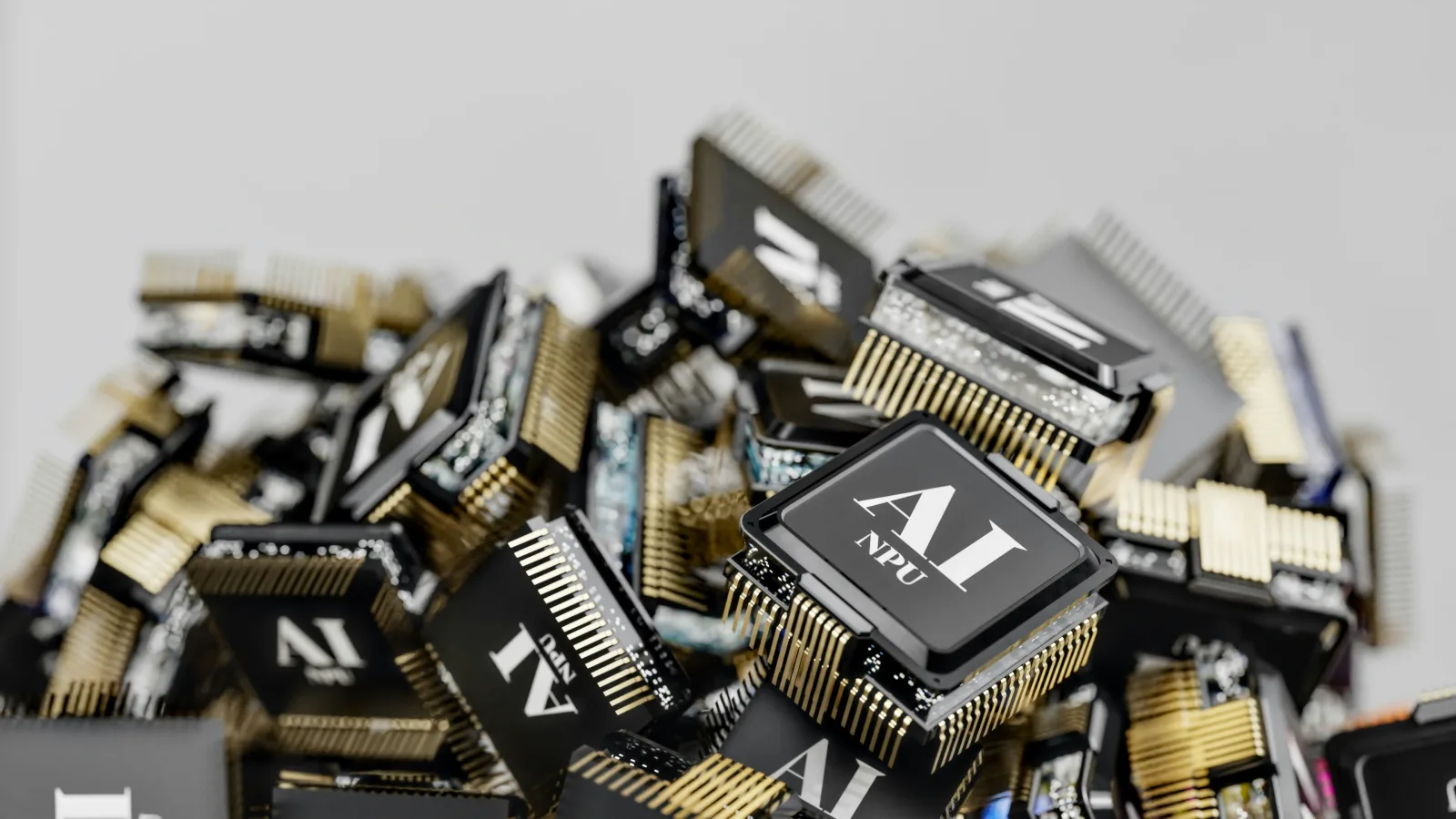
Artificial intelligence has evolved from localized experimentation into a massive infrastructure challenge that taxes global data centers and networking backbones. As large language models (LLMs) and multi-modal neural networks expand in parameter size, individual client devices—from smartphones to edge servers—can no longer bear the computational load of training and high-throughput inference alone. Enter Cloud AI: the foundational ecosystem where high-density GPU clusters, custom Application-Specific Integrated Circuits (ASICs), and low-latency optical interconnects converge. For technology leaders and developers, understanding the mechanics of modern Cloud AI is essential for deploying scalable, cost-effective, and secure intelligent applications.
The Architectural Foundation: Hyperscale Compute and Custom Silicon
At its core, Cloud AI relies on hyper-specialized hardware tiers managed by cloud service providers (CSPs) like Google Cloud, AWS, and Microsoft Azure. Traditional x86 CPU architectures are ill-equipped for the parallel matrix multiplication required by modern deep learning framework backends.
+-----------------------------------------------------------------------+
|                           Cloud AI Ecosystem                          |
+-----------------------------------------------------------------------+
|  Training Tier    |  Custom ASICs & Ultra-High Bandwidth Interconnects |
|  Inference Tier   |  Low-Latency API Gateways & Quantized Acceleration |
|  Edge Integration |  Hybrid On-Device / Cloud Orchestration Routers   |
+-----------------------------------------------------------------------+
To optimize both performance per watt and total cost of ownership (TCO), cloud providers have increasingly migrated from off-the-shelf graphics processors toward custom-designed accelerator chips:
- Training Clusters: Heavy computational workloads use multi-node clusters tied together by high-bandwidth fabrics (such as NVLink or custom RoCE v2 networks) to allow distributed tensor processing across thousands of chips simultaneously.
- Specialized Inference Processors: Devices like Google’s Tensor Processing Units (TPUs) and AWS Inferentia are engineered specifically for low-precision math operations (INT8/FP16), enabling real-time model outputs with minimal energy overhead.
- Dynamic Memory Scaling: Cloud platforms utilize unified memory architectures and high-bandwidth memory (HBM3e/HBM4) to prevent memory bandwidth bottlenecks during large-scale model deployment.
Hybrid Cloud AI vs. On-Device AI: Striking the Operational Balance
While Cloud AI offers virtually infinite compute capacity, relying entirely on remote data centers presents trade-offs in network latency, bandwidth costs, and data privacy. The industry is rapidly adopting a hybrid AI model, splitting tasks between client hardware (NPU-equipped laptops and smartphones) and cloud clusters.
Metric / DimensionOn-Device AI (Edge)Cloud AI (Remote Data Center)LatencyNear-zero (Instant response)Network dependent (20ms – 200ms+)Model SizeSmall / Quantized (1B – 8B parameters)Massive / Uncompressed (100B+ parameters)Privacy & SecurityLocal data boundary (High privacy)Requires encryption in transit and at restOperational CostOne-time hardware purchaseRecurring API / Compute runtime charges
In a hybrid implementation, local NPUs execute initial contextual tasks—such as voice activity detection, image segmentation, or query pre-processing—before routing complex reasoning tasks to the Cloud AI endpoint.
Key Enterprise Challenges: Cost, Latency, and Data Governance
Deploying Cloud AI at scale introduces significant operational complexities that engineering teams must continuously address.
1. Token Economics and API Optimization
Running cloud inference for millions of daily active users can lead to exponential cost growth. Organizations mitigate this through prompt caching, model distillation, and routing non-critical requests to smaller, specialized fine-tuned models rather than flagship foundation models.
2. Data Sovereignty and Compliance
Regulated industries operating under GDPR, HIPAA, or strict regional data laws cannot blindly transmit customer data to public cloud endpoints. Leading Cloud AI platforms now offer confidential computing environments, where data remains encrypted in memory during execution via hardware-isolated enclaves.
3. Sustainability and Energy Constraints
Data centers powering Cloud AI demand unprecedented electrical capacity and cooling infrastructure. Consequently, cloud providers are restructuring facility locations around renewable energy grids and deploying liquid cooling loops directly to server racks to sustain peak compute density.
The Road Ahead: Autonomous Workflows and Cloud Edge Convergence
The trajectory of Cloud AI is shifting from static API queries toward autonomous agentic workflows. Future cloud architectures will not merely respond to user prompts; they will continuously orchestrate multi-step API chains, manage database state changes, and fine-tune localized edge models in real time.
As network bandwidth expands via Wi-Fi 7 and 5G/6G infrastructure, the division between local hardware and remote cloud intelligence will become virtually invisible to the end user.
Conclusion
Cloud AI remains the primary engine driving modern technology innovation, making complex machine learning models accessible to organizations of all sizes. By balancing cloud compute power with local edge processing, technology leaders can build responsive, secure, and cost-effective applications that harness the full spectrum of artificial intelligence.
#CloudAI #EnterpriseTech #ArtificialIntelligence #CloudComputing #RuangTekno
Sources & Industry Context: Technical specifications synthesized from Google Cloud AI platform whitepapers, AWS Architecture Center guides, NVIDIA Enterprise documentation, and Semiconductor Industry Association (SIA) hardware reports.





Komentar 0
Belum ada komentar. Jadilah yang pertama berkomentar!