

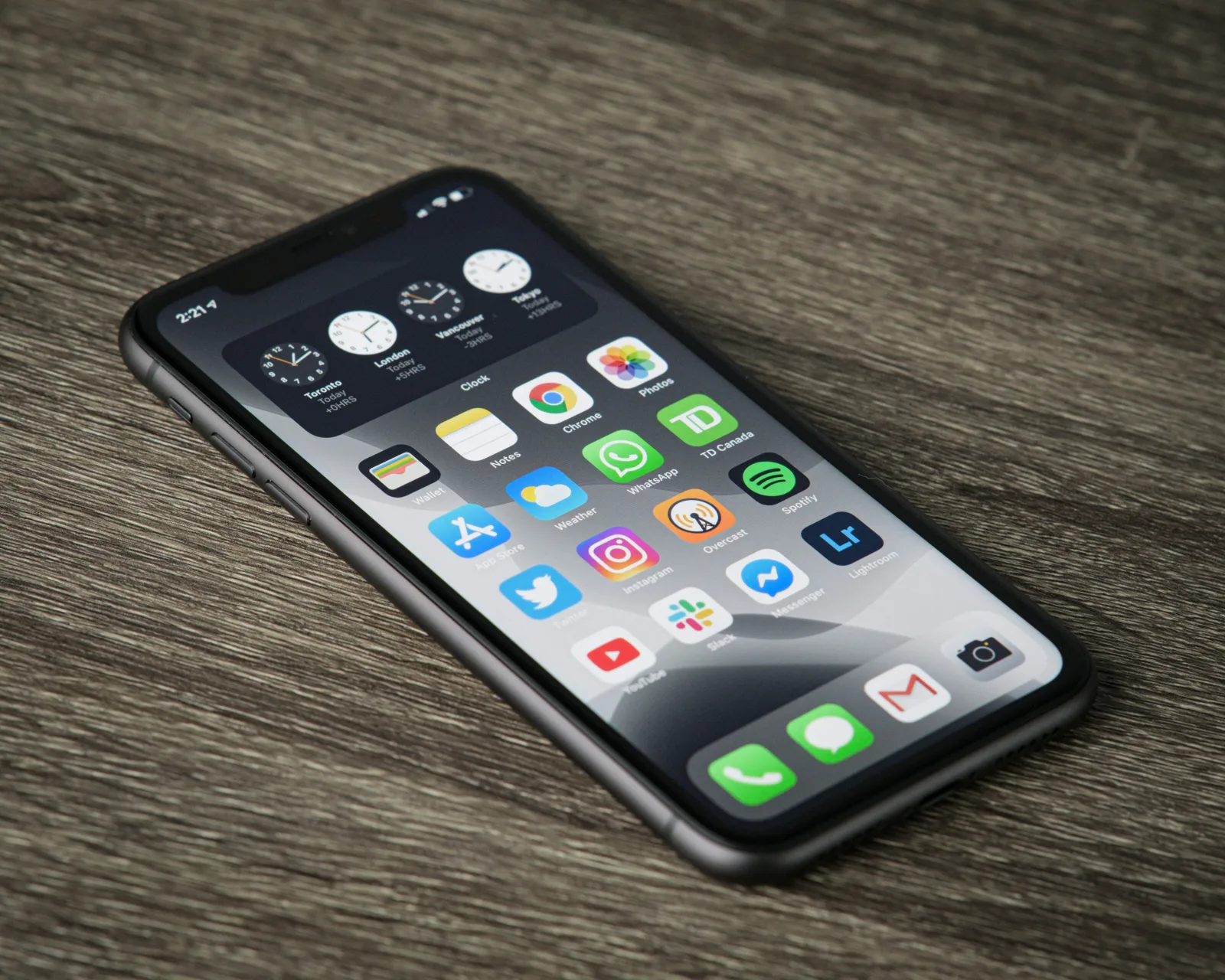
Apple's flagship smartphone lineup takes another step forward with the release of the iPhone 18 Pro and iPhone 18 Pro Max. Building upon design refinements from previous generations, the new flagship series focuses heavily on internal architectural efficiency, professional-grade mobile photography, and thermal management. Featuring the new 2nm A20 Pro processor and a redesigned camera housing, the flagship lineup is engineered to support demanding computational tasks and extended pro-level creative workflows.
Next-Gen Performance: The 2nm A20 Pro Chip Architecture
At the heart of the iPhone 18 Pro series is the Apple A20 Pro chip, manufactured using an advanced 2-nanometer process. The chip features a 6-core CPU configuration paired with a 7-core GPU, offering up to 20 percent faster CPU processing and up to 40 percent faster graphics rendering compared to the prior generation.
                                  +---------------------------------------+
                                  |            A20 Pro Silicon            |
                                  |              (2nm Process)            |
                                  +-------------------+-------------------+
                                                      |
                    +---------------------------------+---------------------------------+
                    |                                 |                                 |
        +-----------v-----------+         +-----------v-----------+         +-----------v-----------+
        |       6-Core CPU      |         |       7-Core GPU      |         |  Dual 16-Core Neural  |
        |  (2 Super / 4 Efficient|         | (Neural Accelerators) |         |        Engine         |
        +-----------------------+         +-----------------------+         +-----------------------+
To prevent thermal throttling during extended sessions—such as 4K video editing, high-frame-rate gaming, or local AI processing—Apple implemented a redesigned vapor chamber cooling structure. The new thermal assembly delivers up to 40 percent better sustained performance. System memory has also been upgraded across the Pro tier to 12GB of RAM with 50 percent higher memory bandwidth, facilitating faster on-device execution of complex Apple Intelligence models.
Revolutionary Camera Controls: Mechanical Variable Aperture
The optical system on the iPhone 18 Pro series introduces hardware-level variable aperture technology to the main 48MP Fusion camera. Moving away from traditional fixed-aperture lenses, the new sensor physically adjusts light intake across four physical stop values:
- f/1.48: Maximizes light gathering for ultra-low-light environments and natural, shallow depth-of-field bokeh.
- f/1.8: Optimized for portrait photography with a balance between background blur and facial sharpness.
- f/2.8: Tailored for standard daylight street photography and general composition.
- f/4.0: Closes down the mechanical iris to keep entire groups or landscapes crisp and sharp in depth.
Complementing the main sensor, both models include a 48MP Ultra Wide sensor and a 48MP Tetraprism Telephoto camera capable of up to 4x optical zoom and an 8x optical-quality sensor crop. On the front, an upgraded 18MP Center Stage TrueDepth camera provides enhanced low-light clarity and wider spatial photo recording capabilities.
Refined Display and Compact Dynamic Island Architecture
The iPhone 18 Pro maintains a 6.3-inch Super Retina XDR OLED display, while the Pro Max sports a 6.9-inch panel. Both displays deliver peak outdoor brightness up to 3,000 nits, ProMotion 120Hz adaptive refresh rates, and an improved Ceramic Shield 2 front glass equipped with an anti-reflective coating.
+-------------------------------------------------------------------+
|  [  Dynamic Island  ]  <- Relocated IR Flood Illuminator          |
|                           Enables up to 3 Live Activities         |
|-------------------------------------------------------------------|
|                                                                   |
|                   6.3" / 6.9" Super Retina XDR                    |
|                LTPO OLED (1-120Hz, Peak 3,000 Nits)              |
|                                                                   |
+-------------------------------------------------------------------+
By relocating several Face ID hardware elements—including the IR flood illuminator—beneath the OLED layer, Apple reduced the footprint of the visible Dynamic Island. The redesigned cutout offers more usable screen space and now supports displaying up to three simultaneous Live Activities without compromising facial recognition security.
Battery Efficiency, Connectivity, and Hardware Specifications
Energy management in the iPhone 18 Pro series benefits directly from the efficiency gains of the 2nm silicon node and larger physical battery capacities. The iPhone 18 Pro rates up to 36 hours of continuous video playback, while the Pro Max model reaches up to 45 hours. Charging support includes up to 25W MagSafe and Qi2 wireless standards, as well as fast-wired charging via USB-C (USB 3 speeds up to 10Gbps).
Specification ComponentiPhone 18 ProiPhone 18 Pro MaxDisplay Size6.3-inch OLED (2622 x 1206)6.9-inch OLED (2868 x 1320)ProcessorApple A20 Pro (2nm)Apple A20 Pro (2nm)RAM / Base Storage12GB RAM / 256GB Storage12GB RAM / 256GB StorageMain Camera48MP Fusion (Variable f/1.48 - f/4.0)48MP Fusion (Variable f/1.48 - f/4.0)Telephoto / Ultrawide48MP Telephoto (4x) + 48MP Ultrawide48MP Telephoto (4x) + 48MP UltrawideWireless / NetworkingApple N1 (Wi-Fi 7, Bluetooth 6, 5G)Apple N1 (Wi-Fi 7, Bluetooth 6, 5G)Battery Life (Video)Up to 36 hoursUp to 45 hoursWeight211 grams249 grams
Conclusion
The iPhone 18 Pro and 18 Pro Max represent a clear hardware transition focused on sustained processing efficiency and photographic depth control. Through the introduction of the 2nm A20 Pro system-on-chip, physical variable aperture optics, higher memory throughput, and a condensed Dynamic Island, Apple provides a robust toolset designed for high-performance mobile computing and professional content creation.
References & Sources:
- Apple Newsroom – Official iPhone 18 Pro Series Announcement
- Apple Technical Specifications Index – iPhone 18 Pro Models
- Industry Semiconductor & Display Assembly Reports (September 2026)




Komentar 0
Belum ada komentar. Jadilah yang pertama berkomentar!