

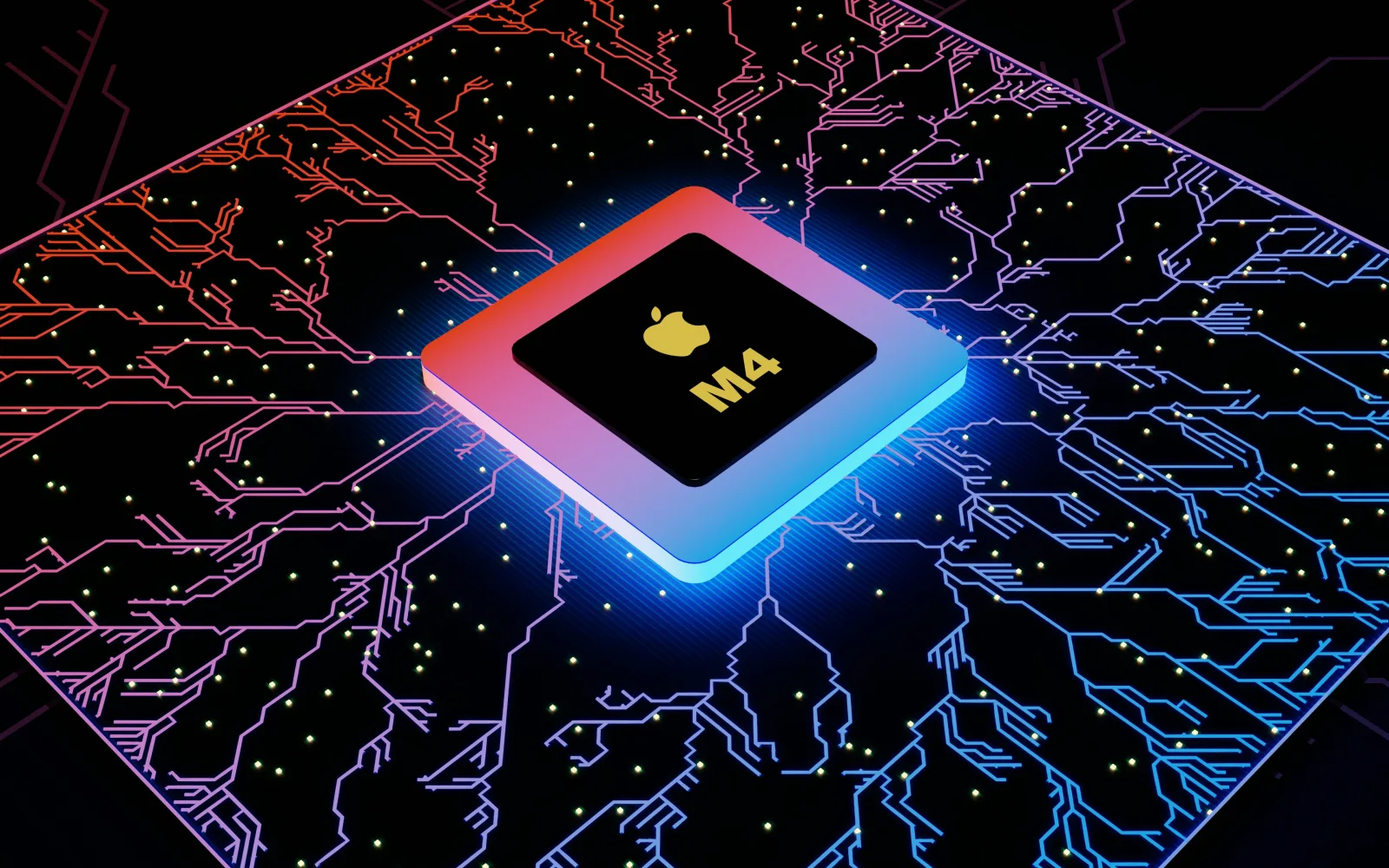
As generative models, continuous natural language processing, and advanced computational vision become standard across mobile ecosystems, modern mobile silicon must handle complex machine learning workloads efficiently. Traditional central processing units (CPUs) and graphics processing units (GPUs) are optimized for sequential logic and parallel graphical rendering, respectively, but they incur high thermal and power overhead when running deep neural networks. To resolve this bottleneck, Apple integrates a specialized Neural Processing Unit (NPU)—known as the Apple Neural Engine (ANE)—directly into its System-on-Chip (SoC) architecture.
The Architecture of the Apple Neural Engine
The Apple Neural Engine is a domain-specific accelerator custom-built for low-precision tensor arithmetic, which forms the foundation of modern deep learning algorithms. While CPUs rely on small numbers of high-clock-speed cores and GPUs deploy thousands of small vector cores, the Neural Engine uses dedicated multiply-accumulate (MAC) arrays engineered specifically for matrix math.
+----------------------------------------------------------------------+
| Main Memory (LPDDR) / Unified Memory Architecture                    |
+----------------------------------------------------------------------+
                                   │
                                   ▼ (High-Bandwidth DMA Channel)
+----------------------------------------------------------------------+
| Apple Neural Engine: MAC Arrays + Local SRAM Buffers + Control Unit  |
+----------------------------------------------------------------------+
By executing lower-precision data formats ($INT8$ and $FP16$) across massive parallel pipelines, the Neural Engine achieves trillions of operations per second (TOPS) at a fraction of the power consumption required by conventional compute clusters. Integrated local SRAM cache memory further prevents the engine from constantly fetching data from system RAM, sharply reducing memory bus latency and battery drain.
Read Also: Camera System Evolutions: Telephoto Capabilities and Low-Light Enhancements
On-Device AI vs. Cloud-Based Machine Learning
Understanding the role of the Neural Engine requires examining the fundamental trade-offs between local on-device execution and remote cloud inference:
- Latency and Responsiveness: Local hardware processes inference queries instantly without waiting for network handshakes, packet transmission, or server queue delays.
- Data Privacy and Security: Sensitive biometric data, voice recordings, and personal text inputs remain isolated inside device storage rather than passing over external networks to remote data centers.
- Offline Functionality: On-device AI models operate continuously without an active cellular or Wi-Fi connection, maintaining full feature utility in isolated environments.
By offloading repetitive machine learning workloads—such as computational photography filters, real-time audio transcription, and predictive text generation—to the ANE, the system preserves CPU and GPU bandwidth for critical operating system tasks and background UI rendering.
Core ML Integration and Developer Optimization
The hardware capabilities of the Neural Engine are exposed to software through Apple’s native Core ML framework. When a developer compiles a machine learning model, Core ML acts as an intelligent compiler that analyzes the model's computation graph and dynamically partitions operations across available hardware modules.
For example, standard scalar logic runs on CPU cores, heavy floating-point graphical rendering goes to the GPU, and matrix tensor operations are routed directly to the Neural Engine. This automatic hardware allocation ensures that third-party applications run inference tasks with optimal battery efficiency without requiring manual assembly-level programming from software engineers.
Energy Efficiency and Thermal Management in Compact Enclosures
Mobile devices operate under strict physical and thermal constraints, lacking active cooling fans or large heat sinks. Running large language models (LLMs) or diffusion-based generative algorithms on traditional CPU architectures quickly causes internal temperatures to spike, forcing the operating system to throttle clock speeds to prevent hardware degradation.
The Neural Engine mitigates thermal stress through specialized energy-per-watt efficiency. By completing complex matrix multiplications within short, high-efficiency bursts and returning to low-power idle states instantly, the ANE keeps thermal output low. This allows smartphones and compact tablets to sustain prolonged machine learning tasks during intensive camera usage, gaming sessions, or productivity workflows without sacrificing device longevity.
Conclusion
The Apple Neural Engine represents a fundamental shift toward heterogeneous mobile computing, where specialized domain accelerators replace general-purpose silicon for machine learning tasks. Through dedicated multiply-accumulate hardware, tight Core ML framework integration, and localized memory management, the ANE enables powerful, low-latency, and privacy-focused artificial intelligence directly on consumer devices without compromising battery life.
Sources / References:
- Microarchitecture analyses of mobile Neural Processing Units (NPUs) and tensor acceleration hardware.
- Technical documentation on Apple’s Core ML framework, developer optimization pipelines, and hardware execution graph routing.




Komentar 0
Belum ada komentar. Jadilah yang pertama berkomentar!